
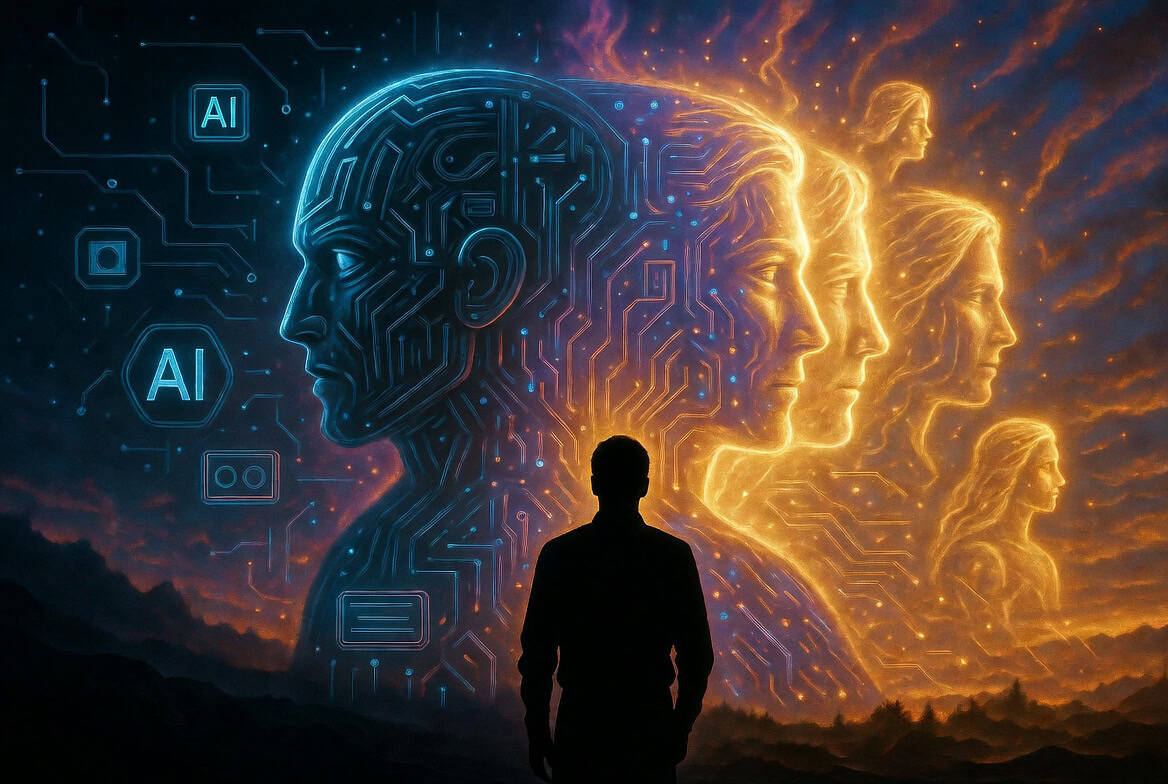
When you scroll through your feed nowadays, you get bombarded by headlines screaming about AI taking over jobs, destroying creativity, or even ending humanity as we know it. You’re a midlife professional, already juggling career pressures, family, and that nagging sense of “Is this all there is?” And now, this wave of societal panic about artificial intelligence hits you like a tsunami. You feel overwhelmed, anxious, perhaps even isolated if you’re one of the few who sees potential in AI rather than pure doom.
It’s like the whole world is freaking out, and you’re left wondering if you’re the crazy one for feeling a spark of optimism amidst the chaos. This collective AI anxiety isn’t just personal—it’s a deep, shared fear bubbling up from something much larger. But what if I told you this panic isn’t new, and understanding it could be the key to turning your AI worries into a path toward personal sovereignty?
At The Small Reset, we help midlife professionals like you navigate AI disruption not as a threat, but as an opportunity for reinvention. Drawing from Carl Jung’s profound insights, alongside Friedrich Nietzsche and Alan Watts, we frame these challenges as catalysts for economic, existential, and geographic liberation.
In this post, we’ll dive into Jung’s concept of the collective unconscious and how it explains society’s knee-jerk panic about technology. We’ll explore the background of this phenomenon, historical parallels, and, most importantly, practical solutions to reclaim your sovereignty. By the end, you’ll see AI anxiety not as an enemy, but as a mirror revealing untapped potential within yourself and society.
Drowning in Societal AI Fear
Let’s start with the reality you’re facing right now. According to recent data, AI job disruption is projected to displace up to 85 million jobs globally by 2030, with search interest in AI-related career terms skyrocketing 131% since 2019. For midlife professionals, this hits hard. You’ve built a career, perhaps climbed the corporate ladder, only to feel like the ground is shifting beneath you. Headlines blare about AI replacing lawyers, writers, engineers—even creative roles once thought untouchable. Social media amplifies it: friends posting about layoffs, influencers warning of dystopian futures, and experts debating whether AI will usher in utopia or apocalypse.
This isn’t just information overload; it’s emotional warfare. You might feel overwhelmed by the constant noise, questioning your relevance in an AI-driven world. Worse, if you’re optimistic—seeing AI as a tool for entrepreneurship or efficiency—you might feel alienated, like you’re swimming against a tide of pessimism. This societal AI panic taps into deeper fears: loss of control, obsolescence, and the erosion of what makes us human. It’s no wonder 74% of workers fear job loss to AI, creating a collective dread that seeps into your daily life, fueling midlife dissatisfaction and anxiety.
But here’s the twist: this isn’t unique to AI. Society has panicked about technology before—think of the Luddites smashing machines during the Industrial Revolution or fears of computers in the 1980s leading to mass unemployment. So why does it happen again and again? Enter Carl Jung, the Swiss psychiatrist whose ideas on the psyche offer an illuminating lens.
Jung’s Collective Unconscious and Shadow Projection
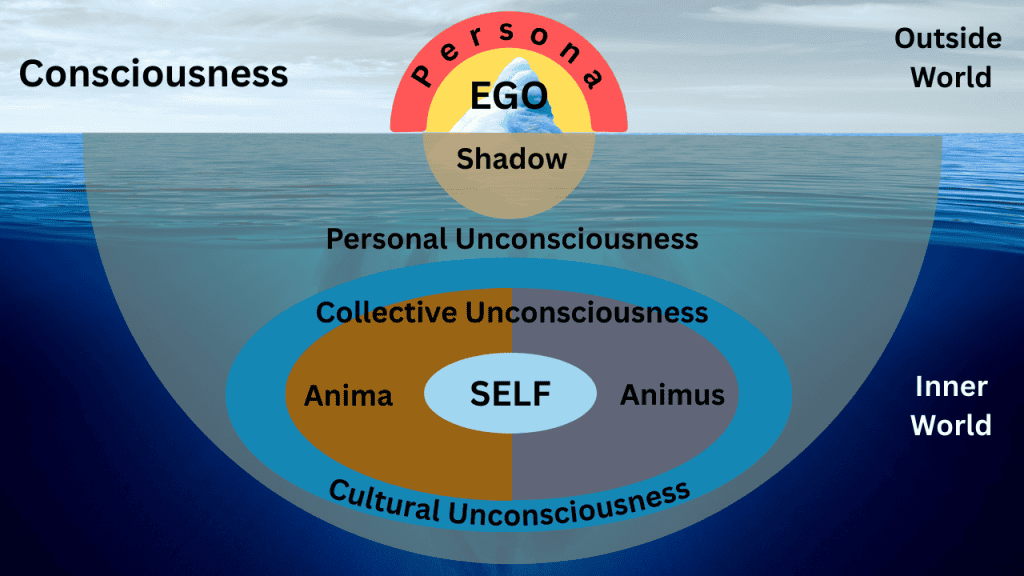
Carl Jung, one of the foundational figures in depth psychology, introduced the concept of the collective unconscious in the early 20th century. Unlike Freud’s personal unconscious, which holds repressed individual memories, Jung’s collective unconscious is a shared reservoir of human experience. It’s like a psychic inheritance passed down through generations, containing archetypes—universal symbols and patterns that shape our thoughts, dreams, and behaviors. These include the Hero, the Shadow, the Anima/Animus, and more, manifesting in myths, religions, and cultural narratives worldwide.
Shadow Projection: The Mechanism Behind AI Panic
In the context of AI, Jung would argue that our societal panic is a projection from this collective unconscious. Specifically, it’s the Shadow archetype at play. The Shadow represents the repressed, “dark” aspects of ourselves—traits we deny or fear, like aggression, laziness, or inferiority. On a personal level, we project these onto others (e.g., blaming a colleague for our own shortcomings). But collectively, societies project their Shadow onto external threats, like new technologies.
AI becomes the perfect scapegoat for our collective Shadow. Why? Because it mirrors what we fear most in ourselves: the unknown, the mechanical, the loss of humanity. In an era where midlife professionals already grapple with identity tied to job titles—feeling like cogs in a corporate machine—AI amplifies this. We project our fears of obsolescence onto algorithms, seeing them as cold, soulless invaders rather than tools. This is “shadow projection” on a massive scale: society’s unacknowledged anxieties about change, inequality, and existential emptiness get dumped onto AI.
Historically, this pattern repeats. During the printing press era in the 15th century, scholars feared it would dumb down knowledge and erode oral traditions—projecting societal shadows of ignorance and loss of control. The automobile in the early 1900s sparked panics about moral decay and urban chaos, reflecting fears of rapid modernization. Even electricity was once demonized as “unnatural,” echoing our dread of tampering with nature. Jung observed similar dynamics in his time, noting how collective unconscious fears fueled reactions to world wars and technological booms.
The echo chamber that amplifies fear
In today’s AI age, this projection is intensified by media and social algorithms that thrive on fear. The collective unconscious, stirred by archetypes like the “Apocalypse” or “Machine Overlord,” creates a feedback loop: one viral post about AI doomsday sparks thousands more, amplifying the panic. For midlife folks, this resonates deeply because it coincides with personal individuation. The Jungian process of integrating the self, often triggered by midlife crises. AI disruption forces us to confront whether our careers reflect our true selves or just societal roles.
Key to Jung’s framework is that the collective unconscious isn’t just destructive; it’s a source of wisdom. Archetypes like the Shadow, when integrated rather than projected, lead to growth. Societal AI panic, then, is a symptom of unintegrated shadows—fears of irrelevance, over-reliance on technology, and disconnection from our human essence. But recognizing this opens the door to transformation.
The Solution: Integrating the Shadow for Personal Sovereignty
So, how do we move from panic to power? At The Small Reset, we apply Jung’s insights practically, blending them with Nietzsche’s will to power and Watts’ embrace of uncertainty to build sovereignty. The goal: turn collective AI fear into individual liberation.
First, acknowledge the projection. Start with self-reflection: Journal about your AI anxieties. Ask, “What does my fear of AI reveal about rejected parts of myself?”. If you dread job loss, it might highlight unfulfilled creativity or over-dependence on external validation. This is shadow work—Jung’s method of confronting and integrating the dark side. A simple exercise: Visualize AI as a mirror. What “shadow” traits does it reflect back? Cold efficiency? Perhaps it’s showing your own suppressed need for balance between work and life.
Second, seek historical context to normalize the fear. Study past tech panics to see patterns from the collective unconscious. This provides perspective: Just as the printing press democratized knowledge, AI can liberate you from rote tasks, freeing time for meaningful pursuits. Nietzsche’s “amor fati” complements this—love your fate, including AI’s role in it. Embrace disruption as a call to become your “Übermensch,” reinventing yourself beyond outdated job titles.
Third, integrate archetypes actively. Use Jung’s active imagination technique: Meditate on AI as an archetype, perhaps the “Wise Machine” rather than the Shadow. Imagine dialogues with it—what advice does it give for your career? This shifts projection to integration, turning fear into allyship. For midlife professionals, this aligns with individuation: View AI disruption as the “midlife crisis” signal, pushing you toward wholeness.
The 3 pillars of shadow integration for sovereignty
Practically, apply this to sovereignty strategies:
- Economic Liberation: Use AI tools for entrepreneurship. Shadow work reveals fears of failure; integrate them to launch side hustles. Our “Sovereignty Scorecard Intensive” course teaches this, helping you build scalable income streams.
- Existential Liberation: Reconnect with your authentic self. Jung’s collective unconscious shows shared midlife patterns—use them to rediscover purpose. Watts’ wisdom of uncertainty reminds us: Flow with AI changes, don’t resist.
- Geographic Liberation: AI enables remote work; overcome shadow fears of instability to achieve location independence.
Community is key—join like-minded professionals to share stories, reducing isolation. At The Small Reset, our programs foster this, turning collective shadows into shared growth. Subscribe to our YouTube Channel and become a part of our tribe.
Finally, act: Start small. Audit your AI fears this week, then experiment with a tool like ChatGPT for career brainstorming. Over time, this builds resilience, transforming societal panic into personal empowerment.
Conclusion: From Collective Fear to Individual Freedom
Society’s AI panic, viewed through Jung’s collective unconscious, is a projection of our deepest shadows—fears of change, irrelevance, and loss of humanity. But for midlife professionals, this is an invitation to sovereignty. By integrating these shadows, you not only navigate AI disruption but thrive in it. You pave the road to achieving the economic, existential, and geographic freedom you deserve.
If this resonates, explore our resources at The Small Reset. Start with our Archetype test to understand better your personality and how it can help you on your way to liberation. Remember, as Jung said, “Until you make the unconscious conscious, it will direct your life and you will call it fate.” Don’t let collective fear dictate yours—reset it.
FAQ
What is Jung’s collective unconscious?
Jung’s collective unconscious is a shared psychic reservoir of human experiences, archetypes, and patterns inherited across generations. It influences societal behaviors, including fears like AI panic, by manifesting universal symbols in myths, dreams, and cultural narratives.
Why does society fear AI according to Jung?
According to Jung, societal AI fear is a projection of the collective Shadow—repressed aspects like obsolescence and loss of humanity. AI mirrors these unacknowledged anxieties, amplified by media, creating a feedback loop of panic similar to historical tech fears.
What is Jungian shadow work?
Shadow work is Jung’s method of confronting and integrating repressed “dark” traits. In the context of AI anxiety, it involves reflecting on fears to reveal rejected self-aspects, transforming dread into self-awareness and action for personal growth.
Will AI take my job?
While AI may disrupt up to 85 million jobs by 2030, it also creates opportunities. Using Jung’s insights, view this as a call to individuation—reinvent yourself beyond job titles, leveraging AI for entrepreneurship and sovereignty.
How to overcome AI anxiety using Jung’s ideas?
Overcome AI anxiety by acknowledging projections, practicing shadow work (e.g., journaling fears), and integrating archetypes through active imagination. Blend with Nietzsche’s amor fati and Watts’ uncertainty to flow with changes, achieving economic, existential, and geographic liberation.
Recent Posts
What 12 Days Without Food Taught Me About My Shadow: A Jungian Experiment
Our modern bodies have long forgotten they are built to survive without constant calories. We're bombarded by snacks, soft drinks, and delicacies—every lobby has a bowl of sweets, every fridge...
The Übermensch Career Path: Nietzsche's Blueprint for Midlife Reinvention
There’s a particular kind of midlife crisis that never shows up on Instagram. From the outside, your career looks…fine. Better than fine, maybe. You’ve got the respectable title, stable income,...