
As AI job displacement anxieties continue to surge—with 52% of U.S. workers now worried about AI’s impact and tech layoffs up significantly from last year—midlife professionals in their 40s and 50s are facing more than career shifts. A surprising 40% of U.S. adults have considered relocating recently—fueled by career opportunities, lifestyle upgrades, and a search for something more.
Yet, for midlife professionals like you, the gap between dreaming of a move and making it often isn’t just logistics or finances—it’s the deep-rooted psychology of place, where your identity has fused with your surroundings, turning “home” into an invisible anchor amid life’s upheavals.
The Mental Roots of Geographic Entrapment
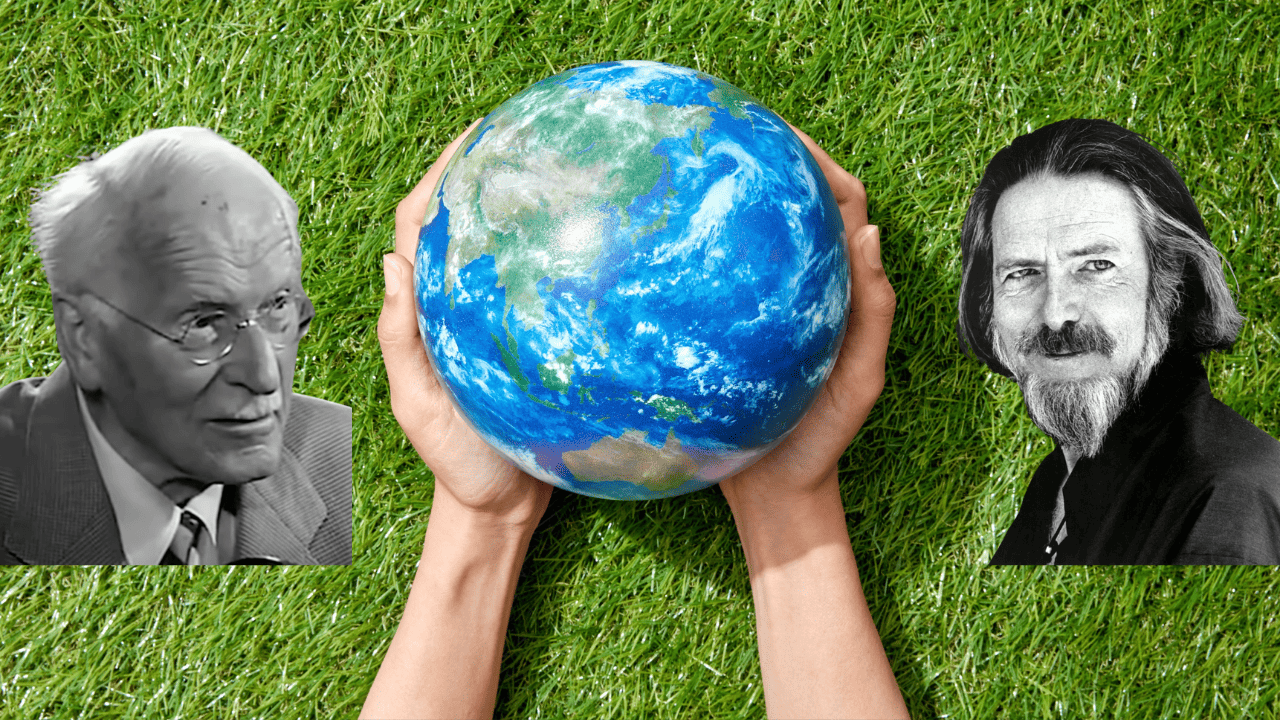
True geographic liberation starts not with a plane ticket, but in the mind. Through Carl Jung’s insights on persona and shadow tied to location, and Alan Watts’ wisdom on flowing with uncertainty during transitions, this post reveals how to untether your sense of self from place, unlocking personal sovereignty in an era of rapid change.
These concepts powered my own midlife reinvention: quitting my corporate career, relocating my family to Mexico, and embracing true sovereignty. This sparked The Small Reset’s mission—empowering midlife professionals (40-55) to transform AI disruption into an ally for economic, existential, and geographic liberation.
We’ll preview how Jung’s psychology binds us to “home,” how Watts’ ideas enable flow in transitions, then explore integrated strategies and practical steps to expand your geographic mindset and overcome place as a hidden sovereignty barrier. Let’s dive in.
Understanding the Psychology of Place: Why We’re Geographically Trapped
The Invisible Chains of Location
Our sense of who we are often gets tied up with where we live. This is what people call the psychology of place—how our surroundings shape our identity over time. For many in midlife, especially those in their 40s and 50s, this can feel like a quiet trap. Geographic mobility has been dropping in recent years, partly because of aging families, higher costs, and job ties.
Even when people want to move for better opportunities, they stay put. This gets worse with AI changing the job market, making old routines feel even more stuck. “Home” is a safe spot that once made you feel good, but now it can hold you back from growth in a fast-changing world.
Jung’s Persona and Shadow: How Place Becomes Part of Your Mask
Building on these invisible chains, let’s see how Jung’s concepts explain this further. Carl Jung talked about the persona as the face we show the world, like a mask we wear to fit in. Often, this mask gets linked to our location—for example, being the “reliable provider in the suburbs” or the “busy executive in the city.”
Our place of residence shapes who we are—it gives us a feeling of security, belonging, and comfort. But if we don’t spot the need for change, it can limit our growth. Then there’s the shadow, the parts of ourselves we push away or ignore. In terms of place, this might be dreams of adventure or a simpler life that we see as too risky or impractical.
We project these hidden feelings onto our current spot, blaming it for our dissatisfaction without seeing the deeper issue. In midlife, this can show up as a crisis, which Jung saw as a call to individuation—growing into your full self. For professionals facing AI shifts, it’s a chance to question if your location is helping or hiding you. At The Small Reset, we use shadow work to help with this. It’s about looking honestly at how your place might be covering up your true desires.
By bringing those shadow parts into the light, you start to see location as a choice, not something fixed. This ties into existential sovereignty, where you claim freedom by aligning your outer life with your inner one. Simple exercises, like journaling about what your current home represents, can start this process and open doors to real change.
Jung’s Framework: Untethering Identity from Location
Persona Tied to Place—The Midlife Trap
Jung’s idea of the persona is like the role we play in life to fit in with others. Often, this role gets wrapped up with where we live. For example, you might see yourself as the “provider in the suburbs,” tied to a steady job and family routines. This can limit your sense of freedom because it makes change feel impossible.
In the AI age, things speed up—jobs shift quickly, and suddenly that safe role shows its weak spots. What once felt secure now feels fragile as tech changes how we work. Jung also talked about archetypes, these deep patterns in our minds that shape our stories. Think of the Hero’s Journey, where the hero leaves home to grow and transform. Relocation can be like that—a step into the unknown that pushes you beyond old limits, especially in the AI age where staying put might mean falling behind.
The real pain here is the fear of uprooting your family or career. It comes from depending too much on that persona tied to your location. If your identity is built around “where I am,” moving feels like losing who you are. But recognizing this trap is the first step to breaking free.
Shadow Work for Geographic Freedom
Now that we’ve seen how place can trap us in familiar roles, let’s turn to a practical way to break those bonds. Shadow work is one of Jung’s key tools—it’s about facing the parts of yourself you’ve hidden or ignored. When it comes to location, try this simple journaling prompt: “What rejected dreams does my current location represent?” Maybe it’s a longing for travel or a quieter life that you’ve pushed aside as unrealistic.
Writing about it helps bring those hidden feelings to light. This process liberates you by showing that your location isn’t set in stone—it’s a choice. Integrating your shadow means accepting those dreams as part of you, which opens up existential sovereignty. That’s the freedom to live in line with your true self, not just the role you’ve been playing.
At The Small Reset, we see this as a way to turn midlife doubts into real action. Instead of feeling trapped by “home,” you start seeing possibilities. It’s not about forcing a big move right away, but about gaining the inner clarity to decide what’s right for you.
Individuation in the AI Age
Taking shadow work a step further, individuation is Jung’s term for growing into your whole self—it’s a journey that often kicks off in midlife. He described it as four stages: facing your persona, integrating your shadow, balancing your inner opposites, and connecting to something bigger. A midlife crisis isn’t just a breakdown; it’s a signal to start this process. Geographic moves can act as catalysts here, shaking things up and forcing growth.
In the AI age, this fits perfectly with using tools like remote work apps to support your journey. AI isn’t the enemy—it’s an ally that lets you work from anywhere, building economic and geographic freedom. As we teach in Phase 2 of The Small Reset’s strategies, sovereignty comes from systematic steps like this. For midlife professionals, embracing individuation means turning tech disruption into a chance for reinvention. You don’t have to stay stuck; use these ideas to create a life that’s truly yours, location and all.
Alan Watts’ Philosophy: Embracing Uncertainty and Flow in Transitions
The Wisdom of Insecurity—Why Moves Feel Terrifying
Shifting from Jung’s inner exploration, Alan Watts offers a complementary view on handling change from the outside in. He had this simple but powerful idea in his book “The Wisdom of Insecurity”: chasing after security in a world that’s always changing just makes us more anxious. When it comes to where we live, this means holding tight to “home” as if it’s permanent, even though life shows us nothing really is. We build our sense of safety around familiar places, but that ignores how everything shifts over time.
For people in midlife, this hits hard with job market upheavals. Sudden changes like layoffs or new tech demands force us into uncertainty, and our initial reaction is often to cling harder to what’s known. But Watts says we should embrace it instead—let go and flow with it, like the Eastern idea of Wu Wei, which is about acting without forcing things. It’s not passive; it’s moving in harmony with life.
As Watts put it, “The only way to make sense out of change is to plunge into it, move with it, and join the dance.” In the context of geographic moves, this means seeing uncertainty not as a threat, but as a natural part of growing. Holding on too tight just amps up the fear, while flowing with it opens doors to real freedom.
Flow in Geographic Transitions
With that mindset in place, Watts drew a lot from Eastern wisdom, teaching that true peace comes from letting go of control and aligning with life’s natural rhythm. When thinking about moving, this means treating transitions as chances to be fully present, rather than fighting them. Instead of planning every detail to avoid risks, you allow things to unfold and trust the process.
The big pain point here is the fear of uprooting—leaving behind family roots, career networks, or the comfort of “home.” It can feel overwhelming, like you’re disrupting everything for an unknown. But Watts would reframe it as an adventure, a way to step into geographic liberation.
Take my story, for example: leaving a corporate job in Germany and moving my family to Mexico wasn’t a rigid plan. It was about flowing with the uncertainty—letting go of old securities to find a life that aligned better with whom we wanted to be. Watts’ ideas helped me see it not as a risk, but as joining the dance of change.
Practical Watts-Inspired Techniques
To bring this home, try a mindfulness walk in your current location. Stroll around without distractions, noticing how the place feels—its comforts and its limits. This helps you detach emotionally, seeing it as temporary rather than defining.
Then, visualize flow in a potential move: sit quietly and imagine the transition as a river carrying you forward. Picture letting go of control and adapting naturally. These small steps build presence and reduce fear, making geographic freedom feel more reachable.
Integrating Jung and Watts: A Sovereign Approach to Geographic Liberation (300-350 words)
Synergies Between the Two Philosophers
Jung and Watts come from different worlds, but their ideas fit together nicely for building personal sovereignty. Jung’s approach is active—he pushes you to dig into your persona and shadow, facing what’s hidden to grow stronger. Watts, on the other hand, is more about letting go, flowing with life’s changes without fighting them. When you combine them, you get a balanced way to handle geographic shifts: use Jung to spot and work through your deep ties to place, like how your “home” masks parts of you, and Watts to ease into the uncertainty of moving.
In the AI age, this mix is especially helpful. Jung helps you analyze fears tied to location, like projecting your doubts onto staying put because of job or family worries. Then Watts steps in to guide you through transitions, turning that fear into a natural flow. It’s like Jung gives you the map to understand your inner blocks, and Watts shows you how to walk the path without forcing it.
We can even nod to Nietzsche here—his idea of amor fati, loving your fate, adds a layer of accepting whatever comes from a move as part of your journey. Together, these create a full toolkit for sovereignty, where you’re not just reacting to changes but using them to live more freely.
Step-by-Step Liberation Strategy
To make this real, here’s a simple five-step plan blending Jung and Watts:
First, do a shadow audit: sit down and journal about your attachments to your current place—what fears or rejected dreams does it hold? That’s Jung’s active work to uncover hidden parts.
Second, embrace uncertainty with a short meditation: close your eyes for five minutes and picture change as a gentle stream, letting go like Watts teaches. This builds comfort with the unknown.
Third, map opportunities with AI tools—use apps to explore remote jobs or new spots that fit your life, turning tech into a helper for geographic freedom.
Fourth, test micro-moves: start small, like a weekend trip to a new area, to feel the flow without big risks.
Fifth, tie it all into your sovereignty scorecard: track your progress on economic, existential, and geographic fronts. At The Small Reset, our “Sovereignty Scorecard Intensive” course dives deeper into this, helping you apply these steps systematically for lasting change. It’s not about rushing a move, but building the inner strength to choose freely.
Conclusion
We’ve covered a lot here—how our minds tie us to places through Jung’s persona and shadow, and how Watts’ ideas help us flow through uncertainty to find real freedom. True geographic liberation isn’t about forcing a move; it’s about shifting inside first. Jung shows us how to face hidden parts of ourselves that keep us stuck, while Watts reminds us to let go and trust the changes, especially with AI shaking up midlife careers. Together, they open the door to sovereignty, where you choose your path, not just react to it.
Remember, your place doesn’t define you—your mind sets you free. This is at the heart of The Small Reset: turning AI disruption into a chance for economic, existential, and geographic liberation, just like I did by leaving corporate life in Germany for Mexico.
Ready to start? Take our free sovereignty quiz at thesmallreset.org to see where you stand. Subscribe to our Youtube channel for more tips, and check out our mentoring offers to dive deeper. You can also book a free consulting call to plan your next steps. Let’s build this tribe together.
FAQ: Common Questions on Geographic Liberation
What is the psychology of place?
The psychology of place refers to how our environments influence our identity, emotions, and behaviors. For midlife professionals, it often creates a sense of entrapment, where “home” feels secure but limits growth amid career changes.
How does Jung’s shadow work help with feeling geographically trapped?
Shadow work involves exploring hidden aspects of yourself, like suppressed desires for adventure. By journaling prompts such as “What dreams does my location reject?”, you integrate these parts, turning place from a fixed fate into a conscious choice.
What does Alan Watts mean by embracing uncertainty in moves?
Watts teaches that clinging to security increases anxiety. Instead, flow with change like Wu Wei—treat relocations as natural adventures. Techniques like mindfulness walks help detach emotionally and reduce fear.
Can AI tools support geographic liberation?
Yes, AI enables remote work and opportunity mapping, making location-independent living easier. It turns disruption into an ally for sovereignty, allowing you to align your life with your true self.
How do I start my own geographic liberation journey?
Begin with a shadow audit and uncertainty meditation, then test small moves. Tools like The Small Reset’s sovereignty quiz can guide you toward economic, existential, and geographic freedom.
Recent Posts
Nietzsche's Guide to Midlife Reinvention: Eternal Recurrence as Career Filter
Imagine this: It's the middle of the night, and a demon sneaks into your room, whispering in your ear, "This life you're living right now—your daily grind, your career choices, your unfulfilled...
The Corporate Identity Crisis: How Your Job Became Your Prison in the AI Age
You're 45, staring at your LinkedIn profile, realizing your "Senior Manager" title feels more like a life sentence than an achievement. And the speeding AI job disruption makes you wonder when you're...